- Shop Number 08, Plot Number-101, Sector 21, Landmark: Behind DMart, Nerul (E), Navi Mumbai, India.
- Mon To Sat - 11:00 AM-02:30PM To 05:30PM-09:30PM
Shop Number 08, Plot Number-101, Sector 21, Landmark: Behind DMart, Nerul (E), Navi Mumbai, India.
Mon To Sat - 11:00 AM-02:30PM To 05:30PM-09:30PM
Best Dental Implant Clinic in Nerul
Dental implants are a revolutionary way to replace missing teeth by restoring both function and aesthetics with natural looking results.
At Restore Clinic, implant treatment is planned using advanced diagnostics, imaging and surgical techniques for predictable results.
We are committed to restoring oral function while also maintaining the integrity of the jaw bone and natural beauty of your smile.
What Are Dental Implants?
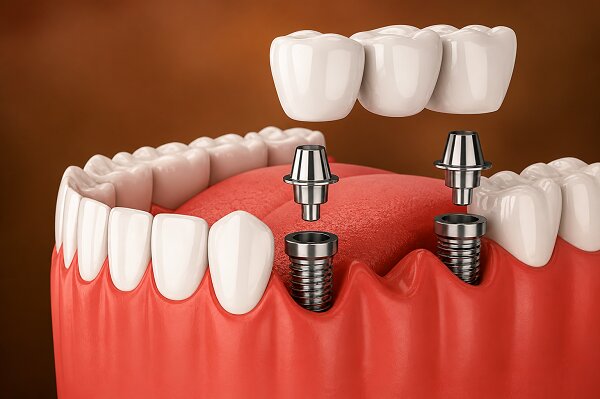
A dental implant is a titanium post placed into the jaw bone that acts as the root of the missing tooth.
The post is designed to mimic the function and structure of the natural tooth root while also supporting the replacement crown that will be placed on the top of the post.
This procedure helps prevent the jaw bone loss that would otherwise occur with the absence of a tooth root and restores the natural function of the missing tooth.
When Do You Need Dental Implants?
- To replace one or more missing teeth
- If you have difficulty chewing food properly
- If you have loose dentures or prosthetic teeth
- If you have a decayed or infected tooth
- If you want to replace your missing teeth with a permanent solution
Dental Implant Treatment Process
Dental implants are a multi-step treatment that is performed following a well-defined process to ensure the long term success of the treatment. The steps involved in the dental implant procedure are:
- Clinical examination and diagnostic imaging
- Digital planning of the implant treatment
- Surgical placement of the titanium post into the jaw bone
- Healing period to allow the post to fuse with the jaw bone
- Attaching the final crown or prosthetic to the post
Factors That Affect Implant Success
The success of a dental implant is determined by a number of factors including:
- The density and quality of the jaw bone
- The condition of the gums
- The skill of the implant dentist
- The aftercare following the placement of the implant.
Why Patients Trust Dr. Sayali Erandolkar Sangvikar for Dental Implant
A dental implant requires surgical precision and expertise to ensure long term success and optimal function.
At Restore Clinic, we take a meticulous approach to every dental implant treatment.
We follow a comprehensive diagnostic driven approach to ensure that we have a clear understanding of the treatment needs of every patient.
We use digital guided implant surgery to ensure minimal invasiveness and faster healing.
We focus on preserving the jaw bone for long term stability of the implant.
We also ensure high precision prosthetic restoration to ensure a natural looking smile.
Related Dental Treatments
Best Dental Implant Clinic in Nerul & Navi Mumbai
Restore Clinic is the preferred dental clinic for dental implant treatments and tooth replacement procedures in Nerul, Seawoods, Sanpada, Vashi, CBD Belapur and the surrounding Navi Mumbai region.
We are known to deliver predictable implant results with a strong focus on long term stability of the restored teeth.
Advanced Implant Dentistry with Clinical Precision
Implant dentistry is a highly specialized discipline that requires surgical precision and prosthetic expertise to restore missing teeth.
Our approach to implant treatment is to first understand the unique requirements of every patient before we plan the treatment.
- We ensure that the bone structure and long term stability of the implant are taken care of before we plan the restoration of the tooth.
- We offer digitally guided implant treatment for enhanced precision.
- We focus on the long term stability of the implant with minimal invasiveness.
- Our implant dentistry practice is committed to delivering predictable results with a strong emphasis on patient safety and comfort.
Restore Your Smile with Dental Implants at Restore CLinic in Nerul
If you are missing one or more teeth or you have unstable dentures, you may want to consider dental implants.
Book a consultation at Restore Clinic to learn more about this tooth replacement option.
Frequently Asked Questions About Dental Implants
What exactly is a dental implant and how does it work?
A dental implant is a titanium post placed into the jaw bone that replaces the root of the missing tooth. The post is placed into the jaw bone and it fuses with the bone over a period of 3-6 months. A crown is then placed on the top of the post to replace the visible part of the tooth. An implant is the closest thing to a natural tooth as it replaces both the root and the visible part of the tooth.
Is a dental implant better than a bridge or denture?
A dental implant is a better option for most patients as compared to a bridge or a denture. A bridge requires reshaping of the healthy teeth on either side of the gap to support the replacement tooth. A denture on the other hand, is uncomfortable and can cause sores in the mouth. A dental implant on the other hand, stands on its own and does not damage the adjacent teeth. An implant also prevents the jaw bone loss that is inevitable with a missing tooth. An implant is a more expensive option than a bridge or a denture but it is a more economical and functional choice in the long run.
Who is a suitable candidate for dental implants?
Any healthy individual with one or more missing teeth is a suitable candidate for a dental implant. However, the patient should have a sufficient density of the jaw bone to support the implant. The patient should also have healthy gums with no signs of infection. Certain conditions such as diabetes and heavy smoking can also impact the success rate of the implant and should be taken into consideration before the procedure. A thorough diagnostic examination is performed to determine if a patient is a good candidate for the treatment.
Is the implant procedure painful?
The procedure is performed under local anaesthesia and is generally well tolerated by the patients. Some discomfort and swelling may be experienced after the procedure but it is easily controlled with pain medications. Most patients return to their daily activities the day after the surgery. The discomfort is much lesser than most patients expect it to be.
How long does the entire implant process take?
The entire process takes anywhere between 3-6 months depending on the individual healing rate of the patient. The titanium post is placed first and it takes 3-4 months to fuse with the jaw bone. The final crown is then attached to the post. Same day implants are possible in some cases, depending on the condition of the jaw bone.
What happens to the jawbone when a tooth is missing?
The jaw bone begins to resorb or shrink when a tooth is lost due to lack of stimulation. This leads to loss of facial volume and a sunken appearance, especially in people who have worn dentures for a long time. An implant post prevents this since it mimics the root of the tooth and provides the necessary stimulation to the jaw bone. This is one of the main advantages of a dental implant over other tooth replacement options.
How long do dental implants last?
The titanium post of the implant can last a lifetime whereas the crown on top generally lasts 15-25 years. With proper care, a dental implant can last for a lifetime. The longevity of the implant also depends on the patient's oral hygiene and other factors such as teeth grinding. Implants have a very high success rate of over 95% after 10 years.
What is the cost of a dental implant and why does it vary?
Implant costs vary depending on the brand and quality of the implant system used, whether any bone grafting is needed beforehand, the type of crown placed on top, and the complexity of the case. A single implant with a crown in Navi Mumbai generally ranges from ₹25,000 to ₹60,000. While it's tempting to compare prices, the quality of the implant hardware and the surgeon's experience matter enormously for a procedure that is meant to last decades.
What is bone grafting and will I need it before getting an implant?
Bone grafting is a procedure that is performed to increase the volume and density of the jaw bone so that it can support the implant. Not all patients require a bone graft but it is a necessary procedure in some cases. If you are a candidate for a bone graft, it will be performed several months before the implant surgery to allow the new bone to integrate with the existing bone. The dentist will determine if you need a bone graft based on your diagnostic scans.
How do I take care of a dental implant after the procedure?
The post of the implant needs to be cared for in the same way as a natural tooth. Regular brushing and flossing is required along with periodic professional cleanings. A water pik can also be used to clean the area around the implant post. The patient should avoid chewing on hard foods and objects as it can damage the crown of the implant. It is also important to avoid grinding of teeth, especially at night. A night guard can be worn to prevent this.